


If you just drove home with an 8-week-old puppy in a crate on your backseat, this is the article you needed the moment you picked that puppy up — not after the first accident on the carpet, not after the biting gets out of hand, and not after you've spent three months wondering why nothing seems to be working. Right now, because the next twelve weeks are the highest-leverage training window your dog will ever have, and most owners don't discover that until it has already closed.
This guide is for new puppy owners in Gainesville and the surrounding communities — from Haile Plantation to High Springs, from Millhopper to Micanopy — who want to start their puppy right instead of fixing it later. It covers the real milestones, the real mistakes, and the real return on getting puppy training right the first time.
At Casper's Camp Hope Dog Training - The behavior specialists in Florida., we see both kinds of clients: the ones who called in week two and the ones who called in year two. The work we do is good at both stages, but it is not the same work, and it is not the same cost — in money, time, or emotional energy. The puppy who starts with us early almost never becomes the reactive adult dog who needs a $3,000 rehabilitation program later.
That's not a sales pitch. That's just the math of dog development. Let's walk through it. 🐾
Why the 8–16 Week Window Changes Everything
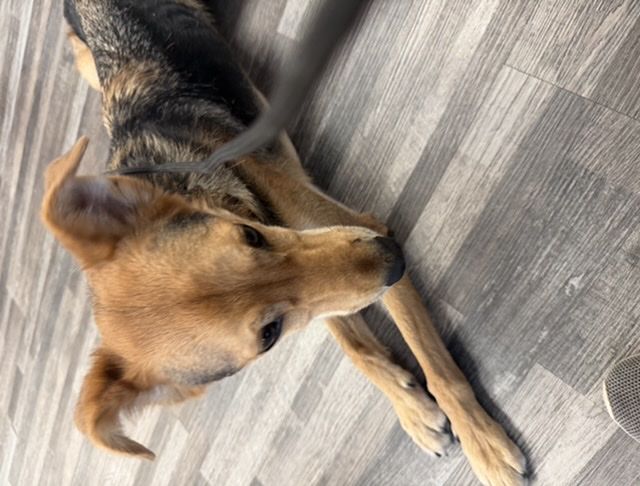
Between roughly 8 and 16 weeks of age, a puppy's brain is doing something that will never happen again at the same scale: it is deciding what normal looks like. Every calm encounter with a stranger writes a small entry in the ledger: people are safe. Every supervised play session with another vaccinated puppy writes another: other dogs are not a threat. Every time a crate means comfort, safety, and quiet — rather than a punishment — the brain logs: being alone is survivable.
That window closes. Not all at once, not with a hard deadline, but with diminishing returns that compound as weeks pass. The confidence and resilience that build during early puppyhood are drawn on for the entire life of the dog. A puppy who experiences that window fully and positively is, on average, far less likely to develop the reactivity, anxiety, and aggression patterns that fill the waiting lists at behavior clinics everywhere.
Here's what nobody tells new owners clearly enough: socialization during this window is not optional enrichment — it is medical-grade prevention. Missing it isn't like skipping a puppy class. It's more like skipping a vaccination. The risk of what you didn't protect against follows the dog forward.
The families who search "puppy training Gainesville FL" in week three have the highest return on investment of anyone who walks through our door. The families who wait until the behavior is already a problem are spending against a debt that could have been avoided.
The First Two Weeks: House Rules Before Habits Form
Puppies arrive at your door as blank slates — which sounds great until you realize the slate starts writing the moment they step inside. Every behavior that goes unremarked becomes a template. If jumping up gets eye contact and a laugh, jumping up is clearly the way to get attention. If the puppy sleeps on the bed without issue on night one, renegotiating that at month six is a much bigger lift.
This is the window for rules, not just bonding. Both are important, but clear, consistent structure in the first two weeks sets the tone for everything that follows.
A few non-negotiables:
- Crate introduction done right. A crate that means safety and calm — not confinement or punishment — is one of the greatest gifts you can give a puppy. Cover it, make it cozy, feed meals near it, and let the puppy explore it on their own terms before you ever close the door. The goal is a dog who chooses the crate, not one who dreads it.
- A potty schedule, not a hope. Young puppies need to go out every 1–2 hours, plus immediately after eating, after napping, and after play. Not "when you remember." Accidents in the house during this window are almost always a management failure, not a training failure — the puppy isn't holding it on purpose. They just can't hold it yet.
- Mealtimes with a purpose. Feeding from a bowl in a calm, predictable spot — not free-fed, not hand-fed exclusively — gives the puppy structure around food and begins to build the kind of settled relationship with their bowl that prevents resource guarding before it starts.
Families across Beville Heights, Cedar Grove, and Arredondo regularly tell us they wish they'd known these basics in the first week rather than calling us when the habits were already six months old. The consultation is free — and it is never too early to ask.
Weeks 3–8: The Socialization Sprint
Once your puppy has had at least their first round of vaccinations, the socialization work can begin in earnest. This does not mean dragging your puppy into every dog park, pet store, and crowded street you can find. Volume is not the goal. Quality is.
Good socialization looks like:
- Exposure to novel surfaces, sounds, and environments — not overwhelming, but gradually widening the puppy's world one new thing at a time.
- Supervised play with vaccinated, well-matched puppies — not a free-for-all, but structured encounters where nobody gets bullied and play ends before anyone gets overtired.
- Calm introductions to different types of people — people wearing hats, people using crutches, people with facial hair, people of different sizes and ages — so the puppy's category of "person" is as wide and comfortable as possible.
- Brief, positive separation from you. A puppy who learns early that you leaving is predictable and that you always come back is far less likely to develop separation anxiety.
Puppy training Gainesville FL families who start structured socialization during this window consistently report fewer fear-based reactions in adolescence. The opposite — a puppy kept home or isolated "to be safe" during this period — often arrives at adolescence with a much narrower comfort zone and a much bigger fear response to anything outside it.
If you're in Jonesville, Waldo, or Newberry and wondering where to get safe, structured socialization for a puppy who isn't fully vaccinated, this is exactly the conversation to have at a free consultation. There are safe ways to socialize before the full series is complete — it just requires the right setup and the right dogs in the room.
Bite Inhibition: The Skill That Prevents a Serious Problem
Puppy mouthing is normal. The sharp little needle-teeth making contact with your hand or your ankle are not a sign of aggression — they are how puppies have always communicated and played. But how you respond to mouthing right now determines whether it stays playful or becomes a problem.
Bite inhibition is the skill of learning to control the force of a bite before stopping biting entirely. A dog who learned bite inhibition as a puppy — who got consistent, clear feedback that hard pressure causes play to stop, and that gentle mouthing is tolerated — will almost always choose a gentle mouth even under stress, even much later in life.
A dog who was never taught this, or who was handled harshly enough during puppy mouthing that they became anxious about contact around the mouth, carries that gap with them permanently.
What actually works:
- A sharp, neutral marker sound — not a yell, not a correction — when pressure exceeds acceptable, followed immediately by a pause in attention.
- Consistent responses across the whole household. One person tolerating hard mouthing while another corrects it creates confusion, not learning.
- Plenty of appropriate chewing outlets — so the puppy's drive to use their mouth has legal options.
Dog training in Gainesville FL specialists see bite-related issues frequently in adolescent and adult dogs that could trace their roots directly to bite inhibition work that was skipped or mishandled in the puppy window. It is one of the quietest, most preventable entries on the "wish we'd done that earlier" list.
Leash Skills Start the Day You Clip the Collar
Puppies who grow up associating a leash with lunging, pulling, and stress become the adult dogs who make walks a battle. The leash does not have to mean tension. And the easiest time to establish that is before it has ever meant anything else.
Even before a puppy can reliably walk a full block — even before vaccinations allow you to walk public sidewalks — you can begin building leash association in your own yard or driveway. Clipping the leash and letting the puppy simply carry it. Following the puppy for a few steps. Rewarding the puppy for choosing to stay near you without a verbal cue.
These are not tricks. They are the foundation of loose-leash walking — the dog choosing to stay close because proximity to you is rewarding, not because the leash physically stops them. Families in Sugarfoot, Springtree, and Turkey Creek Forest who start here almost never report pulling as a significant problem later. The ones who start leash work at six months — after the pulling habit is already established — are correcting something rather than building something, and those are very different conversations.
From AKC Star Puppy to Canine Good Citizen: The Certification Pathway 🐶
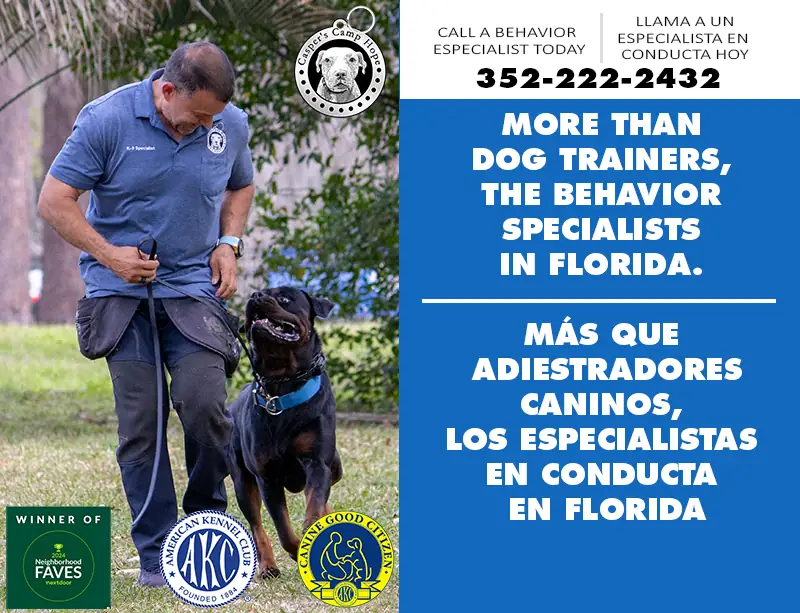
Casper's Camp Hope Dog Training - The behavior specialists in Florida. is certified with the American Kennel Club (AKC) and Hero Labs, and our puppy programs are built around the official AKC certification pathway — one of the most meaningful benchmarks a dog owner can pursue.
Here's how it works:
AKC Star Puppy — designed for puppies 1 year and under who demonstrate basic skills and have owners who complete a basic training class. This is typically the first milestone in our puppy program. It is not a trick test; it is a confidence test. Sit, down, come, leash manners, and the ability to be handled calmly by a stranger.
AKC Canine Good Citizen (CGC) — the foundational certification that tests real-world manners: accepting friendly strangers, walking in a crowd, sitting politely for petting, staying calm during distractions. This is the credential that opens doors — to therapy dog programs, to housing that restricts certain breeds, to anyone who wants proof that their dog is genuinely well-socialized.
Community Canine and Urban CGC — advanced levels that test a dog's manners in real community settings, on busy streets, in outdoor dining areas, and in close proximity to other dogs. These are the certifications that turn a well-trained dog into a genuinely remarkable companion.
Every puppy that comes through our program has a pathway to all four. And every certification is a permanent credential — a proof of work that follows your dog for life.
Puppy Obedience Camp vs. Group Classes: What's Right for Your Dog
The first thing most people search when looking for puppy training camp near me in Gainesville is "puppy class." Group puppy classes have real value — socialization in a structured setting, owner education, a weekly rhythm. But they are not the right fit for every puppy, and they are rarely the most efficient route to the results most owners actually want.
Here's the honest comparison:
| Group Puppy Class | Puppy Obedience Camp | |
|---|---|---|
| Setting | Multiple puppies and owners at once | Individual, trainer-led structure |
| Pace | One size fits the group | Paced to your puppy's development |
| Socialization | Present but often chaotic | Managed, matched, and supervised |
| Owner learning | Shared instructor attention | Dedicated coaching and transfer session |
| Results | Depends heavily on home consistency | Skills embedded, then transferred to owner |
For puppies who are social, easy-going, and have owners who can commit to daily home practice, a quality puppy class can be a good start. For puppies with any early signs of anxiety, reactivity, or over-arousal — or for owners who have a busy schedule and want to maximize the developmental window — an immersive obedience camp at around $2,600 is the higher-leverage choice.
And for puppies showing any concerning behavioral signs before 12 weeks? That is a specialist conversation, not a group class conversation. The earlier we see it, the shorter the road.
Puppy Daycare and Boarding: What to Look For — and Why It Matters
If your puppy needs daycare while you work, or boarding when you travel, the environment they spend that time in is not a neutral factor. Every single hour of a young puppy's social life is shaping their brain. A chaotic, unmanaged daycare full of stressed dogs and overwhelmed staff is not enrichment — for some puppies, it can be actively harmful.
Here's what good puppy daycare actually looks like:
- Personality and size matching — a 10-week-old golden retriever does not belong in an open yard with large adolescent dogs. Matching matters, and it requires active, educated oversight.
- Trainers on the floor, not just cameras in the corner. Someone who reads body language in real time — before a play session escalates, not after — is the difference between an experience that builds confidence and one that erodes it.
- Low arousal tolerance. Puppies need to come down from high arousal regularly. A well-run daycare uses structure to keep energy at a productive, sustainable level, not a constant froth.
- Updates you can trust. A facility that can tell you exactly how your puppy played, ate, and rested is one that was actually paying attention.
At Wadda Good Doggy Play Camp, every one of those boxes is checked by design. It's how our dog daycare Gainesville FL families across Capri, Alachua, and Windsor can drop their puppies off knowing they'll come home more confident, not more wound up.
And for owners who travel — if you need dog boarding Gainesville FL for a young puppy, the same standards apply. Your puppy's boarding environment should feel like an extension of training, not a departure from it. Our boarding is run with the same care as our training programs, by the same team, in the same structured environment. Your puppy doesn't lose ground while you're gone.
Three Gainesville Puppy Stories: What Getting It Right Looks Like
Names and details have been adjusted for privacy. The transformations are real.
Maple's 90-Day Head Start — Raleigh
A family in Raleigh brought home Maple, a golden retriever puppy, at eight weeks, and came to us before they'd had a single problem. They just didn't want to make the mistakes they'd made with a previous dog years earlier.
Maple went through our structured puppy program starting in week three — crate introduction, potty schedule, bite inhibition work, supervised play with a carefully matched group of vaccinated puppies, leash foundation, and controlled exposure to the kinds of stimuli that Gainesville life is full of. She earned her AKC Star Puppy certification at fourteen weeks.
At six months, Maple's owners brought her back for a check-in. No reactivity. No anxiety. No separation issues. No resource guarding. She was exactly what they'd hoped for — and the reason, more than any single training trick, was that the socialization window was used fully and strategically. The best dog they'd ever owned. The only dog they'd ever trained from the start.
Ozzie's Early Warning — Capri
Ozzie was a ten-week-old German shepherd puppy when his owner in Capri noticed something that made her call us instead of waiting. Ozzie had started stiffening slightly when approached during meals and was showing intense alert barking at the fence line — behaviors that, in a ten-week-old, can be nothing, or can be the earliest warning signs of patterns that become expensive to rehabilitate later.
We saw Ozzie within the week. What we found was a puppy with very high drive and an owner who had, with the best intentions, been letting him "figure out" his environment rather than structuring it. Ozzie wasn't broken — he was bright, sensitive, and under-structured, which in a German shepherd pup is a specific cocktail.
We built him a structured daily rhythm, introduced proper crate and meal protocols to address the early resource tension, and began a controlled desensitization approach to the fence-line reactivity before it had time to lock in. Three weeks later, Ozzie had a different relationship with his environment — calmer, more confident, less activated.
His owner's comment at the end of the program: "If I'd waited six months to address this, would it have been a much bigger deal?" Yes. It almost certainly would have.
Nora Finds Her Confidence — Millhopper
Nora was a rescue pit bull mix, approximately nine weeks old and of uncertain history, when a family in Millhopper brought her home. She was affectionate but skittish, startled easily at sounds, and showed early signs of the separation distress that rescue puppies sometimes carry — whimpering intensely the moment she lost sight of her owners.
The family worked with us on a structured foundation program while also enrolling Nora in Wadda Good Doggy Play Camp several days a week for supervised socialization. The combination worked. The structured camp environment — with personality-matched playmates, calm transitions, and trainers who could read when she was approaching her limit — gave Nora the kind of graduated exposure that built her confidence steadily.
At four months, Nora was a different dog. The startle response had softened dramatically. She slept through the night. She could be in another room without spiraling. When her family needed to travel out of town and Nora spent a week in dog boarding Gainesville FL with our team, she handled the separation calmly — a milestone that would have been unthinkable at nine weeks.
The rescue uncertainty in her background didn't define her. The structured, confident start did.
When Your Puppy's Behavior Needs a Specialist — Not Just a Class
Most puppy behavior — mouthing, jumping, pulling, occasional accidents — is normal development and responds to consistent structure and good guidance. But some puppies arrive with early indicators that warrant a specialist's eyes, not a group class waiting list.
Watch for:
- Sustained freeze or stiff posture during meals, around toys, or when approached in certain situations
- Growling or snapping at family members, not just mouthing during play
- Cowering, hiding, or trembling beyond the first few days of adjustment to a new home
- Intense, hard-to-interrupt reactivity to specific stimuli before 12 weeks — fence charging, intense lunge responses, inability to recover from a startle
- Refusal to eat, sleep, or settle when separated, beyond typical adjustment
If you're searching dog training Gainesville FL and wondering whether what you're seeing is "just puppy stuff" or something that needs professional eyes — call us and describe it. We'll tell you honestly. Some of these patterns, caught at 10 or 12 weeks, resolve in days. Left until adolescence, they can take weeks or months. That gap is exactly what our puppy programs are designed to close.
Jimmy Nievez, our lead trainer, and our certified team at Casper's Camp Hope Dog Training - The behavior specialists in Florida. have worked with every breed and every temperament — the anxious Aussie, the reactive shepherd pup, the soft-mouthed lab who still finds a way to redecorate the baseboards. All breeds. All ages. All temperaments. Every dog can be a good dog. 🐾
(And yes — our team works in English and Spanish, so the right help is never a language away.)
The Long Game: What Early Training Actually Costs vs. What It Saves
A puppy obedience camp runs around $2,600. A full behavior rehabilitation program for an adult dog typically starts at $3,000 — and the most complex cases run higher, take longer, and demand more from the whole household.
That is not a pitch. That is a math problem. And it does not include the property damage a bored, under-stimulated, or anxious dog leaves in its wake, or the vet bills that stress-related conditions generate, or the emotional cost of two years of difficult walks and apologies to neighbors.
The families in Duval Heights, Hazel Heights, and McIntosh who invest in puppy training early are not spending more on their dog — they are spending less, earlier, on the version of the problem that is still small.
The puppy window is the one moment in your dog's life when the investment is lowest and the return is highest. Use it. 🐶
Frequently Asked Questions — The Puppy Training Questions Gainesville Owners Actually Ask
Can I start puppy training before all vaccinations are complete? Yes — with the right setup. You can begin crate training, potty work, bite inhibition, leash foundation, and early manners at home immediately. For socialization with other dogs, we prioritize safe, vaccinated environments with carefully screened participants. Waiting for the full vaccination series to begin all training is one of the costliest mistakes in the puppy window — we help you start smart, not start late.
My puppy bites hard during play. Is that aggression, or is it normal? Almost always normal — puppies bite to communicate and explore. The key is teaching bite inhibition now, while the brain is learning, rather than tolerating hard mouthing until it becomes a habit. Hard, persistent mouthing that doesn't respond to any feedback, or mouthing accompanied by stiff posture and growling, is worth a professional look. Most puppy mouthing is simply a training moment in progress.
What's the difference between AKC Star Puppy and the Canine Good Citizen certification? AKC Star Puppy is designed for puppies under one year and focuses on basic foundational skills and early socialization — it's the first step. Canine Good Citizen (CGC) is the intermediate benchmark, testing real-world manners across 10 practical scenarios. Community Canine and Urban CGC are advanced, testing a dog's behavior in actual public environments. Our puppy programs map to all four — each one is a milestone on the road from "new puppy" to "genuinely well-socialized dog with credentials."
How long does potty training actually take with professional guidance? Most puppies, with a consistent schedule and appropriate management, are showing reliable signals (waiting at the door, circling, whining) within three to four weeks of structured work. The variables are consistency across the household, crate training done correctly from the start, and whether the puppy has any health or developmental factors at play. Puppies who have spent months in inconsistent or punishing potty training environments take longer to reset — another reason the early weeks are worth doing right the first time.
My puppy is comfortable with our family but growls when strangers reach over her head. Should I be worried at 11 weeks? That specific trigger — someone reaching over the top of the head, especially in a small or young puppy — is worth knowing about and addressing early, but it's not automatically a red flag for aggression. Many puppies find overhead approaches from strangers startling, and teaching a proper greeting posture (hand under the chin, not over the top) can resolve it quickly. If the growl is accompanied by hard eye contact, stillness, or snapping, schedule a consultation. We'd rather see it early and say "it's manageable" than have you discover it's more at six months.
Is a board and train program appropriate for a very young puppy, or should they stay home? Well-run board and train programs are appropriate for puppies as young as 8–10 weeks in the right environment. The key is that the facility replicates a genuine home structure — crate time, predictable schedules, socialization with matched dogs, and one-on-one time with a consistent trainer — not just a boarding setup with training bolted on. Our board and train option for puppies is designed exactly this way: your puppy doesn't lose developmental time while you're busy. They use it.
Can regular puppy daycare help prevent separation anxiety before it becomes serious? Yes — structured daycare, introduced gradually and at the right developmental stage, can meaningfully reduce separation anxiety by teaching a puppy that being away from their person in a safe environment is both normal and pleasant. The critical word is structured. Our Wadda Good Doggy Play Camp introduces young puppies carefully: matched playmates, managed transitions, and a calm return experience. This is different from simply dropping a puppy off and hoping they adjust. Dog daycare Gainesville FL done this way builds independence — the kind that makes overnight separations manageable and boarding stress-free.
Your Puppy's Best Life Starts in the Next 90 Days
The puppy asleep in your lap right now — or the one arriving next week — is inside the most important window of their entire life. What you do in these first twelve weeks determines, more than any other period, whether you'll spend the next decade enjoying your dog or managing them.
Casper's Camp Hope Dog Training - The behavior specialists in Florida. works with a limited number of new puppies per program cycle, and those spots fill. Our team is certified through the American Kennel Club (AKC) and Hero Labs, bilingual in English and Spanish, and built specifically for this work — the full range of it, from Star Puppy to service dog certification through our non-profit Underdog Project.
If you're in Jonesville, Newberry, Rochelle, Tioga, or anywhere across the Gainesville area, a free consultation is one call away. We'll look at what you have, tell you honestly what your puppy needs, and map out the program that gives this dog the head start they deserve.
Don't wait for a problem to make the call. Make it now, while the window is open.
📞 Call or text us at 352-222-2432 — English and Spanish both welcome 🌐 Book your free puppy consultation at https://www.casperscamphope.
Limited puppy spots available. Your dog's whole life starts here. 🐾